
How to Stop Genetic Hair Loss: Prevention and Treatment – Skin Bliss Clinic
Hair loss is a common concern affecting both men and women, and genetics is one of the major factors responsible for progressive hair thinning. If you have noticed a receding hairline, reduced hair density, or a widening parting, genetic hair loss may be the underlying reason. Medically known as androgenetic alopecia, this condition develops gradually and can become more noticeable with age.
Although genetic hair loss cannot always be completely prevented, early diagnosis and appropriate treatment can help slow its progression, preserve existing hair, and improve hair density in suitable individuals. Understanding the causes, recognizing early warning signs, and choosing the right treatment approach are important steps towards managing this condition.
At Skin Bliss Clinic, patients receive personalized hair care and treatment guidance under the expertise of Dr. Deepali Marthineni. If you are looking for effective hair loss treatment in Hyderabad, understanding the available prevention and treatment options can help you make informed decisions about your hair health.
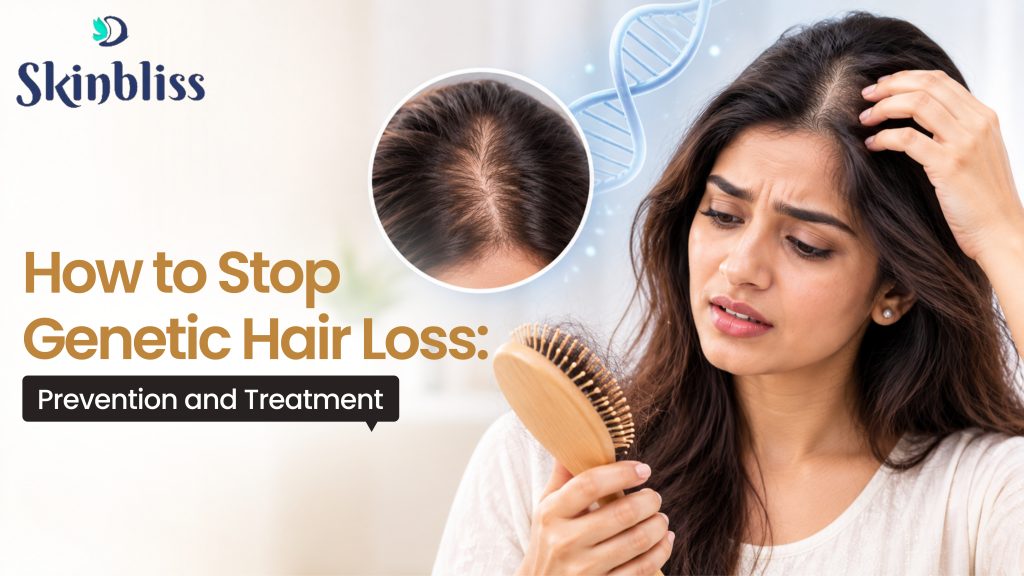
What Is Genetic Hair Loss?
Genetic hair loss is a hereditary condition in which hair follicles gradually become smaller and produce thinner, shorter hair strands. This process is known as follicular miniaturisation. Over time, the affected follicles may produce very fine hair or stop producing visible hair altogether.
Genetic hair loss is commonly influenced by sensitivity to dihydrotestosterone (DHT), a hormone derived from testosterone. In individuals who are genetically predisposed, DHT affects susceptible hair follicles, particularly around the hairline, temples, and crown.
The condition may present differently in men and women:
- Men: Hair loss often begins with a receding hairline, thinning at the temples, or a bald patch on the crown.
- Women: Hair thinning is usually more noticeable along the parting and the top of the scalp, while the frontal hairline is often preserved.
Genetic hair loss is not caused by poor hygiene or a lack of hair washing. It is a progressive condition that requires a targeted approach to management.
What Causes Genetic Hair Loss?
Several factors contribute to hereditary hair loss, although genetics plays the primary role.
1. Family History
If your parents, grandparents, or other close family members have experienced hair thinning or baldness, you may have a higher likelihood of developing genetic hair loss. The condition can be inherited from either side of the family.
2. DHT Sensitivity
DHT can bind to receptors in genetically sensitive hair follicles, causing them to shrink gradually. As follicles become smaller, the hair growth cycle changes, resulting in shorter, thinner strands and reduced scalp coverage.
3. Age-Related Changes
Hair follicles may become increasingly sensitive to hormonal influences as a person ages. This can lead to gradual hair thinning, reduced hair density, and changes in hair texture over time.
4. Hormonal Influences
Hormonal changes may contribute to hair thinning in some individuals. Conditions affecting hormonal balance can sometimes worsen hair loss, particularly when genetic susceptibility is already present.
5. Lifestyle and Environmental Factors
Stress, nutritional deficiencies, smoking, and poor scalp health may contribute to additional hair shedding, making existing genetic hair thinning more noticeable.
While genetics cannot be changed, identifying these factors early can help manage the condition before significant hair density is lost.
How to Identify the Early Signs of Genetic Hair Loss
Recognising early symptoms is important because treatment is generally more effective when started before significant follicular miniaturisation occurs.
Common warning signs include:
- Gradual Hair Thinning: Hair may become noticeably thinner over several months or years.
- Receding Hairline: The hairline gradually moves backwards, particularly around the temples.
- Widening Parting: Women may notice that their central hair parting becomes wider over time.
- Thinning at the Crown: Reduced hair density may become visible around the top or crown of the scalp.
- Reduced Hair Volume: Hair may appear flatter, finer, and less dense than before.
- Increased Scalp Visibility: More of the scalp may become visible, especially under bright lighting.
If these changes continue, consulting a dermatologist can help determine whether the hair loss is genetic or associated with another condition.
How Is Genetic Hair Loss Diagnosed?
Before starting treatment, identifying the exact type and stage of hair loss is essential. A dermatologist may recommend the following assessments:
- Medical History: Understanding family history, medications, lifestyle habits, and the duration of hair loss.
- Scalp Examination: Checking the hairline, crown, parting, and overall scalp condition.
- Dermatoscopy: Examining individual hair follicles and identifying signs of follicular miniaturisation.
- Blood Investigations: Checking for nutritional deficiencies, thyroid abnormalities, or other contributing conditions when indicated.
- Hair Density Assessment: Evaluating hair thickness and density to monitor treatment progress.
Accurate diagnosis helps distinguish genetic hair loss from other conditions, such as telogen effluvium, alopecia areata, and nutritional deficiency-related hair shedding.
Effective Treatment Options for Genetic Hair Loss
When genetic hair loss progresses, preventive measures alone may not be sufficient. Medical treatments and advanced dermatological procedures can help slow hair loss, strengthen existing follicles, and improve hair density. The right treatment depends on the stage of hair loss, scalp condition, age, and individual medical history.
At Skin Bliss Clinic, we consider the underlying cause and severity of hair thinning before recommending a suitable treatment plan.
1. Minoxidil Treatment
Minoxidil is a commonly recommended topical medication for managing androgenetic alopecia in both men and women. It helps stimulate hair follicles, prolong the hair growth phase, and improve hair density in suitable patients.
Regular application as prescribed by a dermatologist is important to achieve and maintain results. Some individuals may experience temporary increased shedding during the initial stages of treatment. Visible improvement generally takes several months, and continued use is usually necessary to maintain the benefits.
2. PRP Hair Treatment
Platelet-Rich Plasma (PRP) therapy is a non-surgical hair restoration procedure that uses growth factors obtained from the patient’s own blood. A small blood sample is collected and processed to separate platelet-rich plasma, which is then injected into selected areas of the scalp.
PRP therapy may help support follicular activity, improve hair thickness, and reduce hair shedding in some individuals with early to moderate hair thinning. Multiple sessions may be recommended depending on the patient’s condition and response to treatment.
3. Growth Factor Concentrate (GFC) Therapy
Growth Factor Concentrate (GFC) therapy is an advanced hair restoration approach that uses concentrated growth factors derived from the patient’s blood. These growth factors are administered into areas experiencing hair thinning to support follicular function.
GFC may help improve hair quality, thickness, and density in selected patients. It is often considered for individuals experiencing early or moderate hair loss. The number of sessions depends on the extent of thinning and the dermatologist’s assessment.
4. Mesotherapy for Hair Loss
Mesotherapy involves delivering selected nutrients and other substances into the scalp through small injections. Depending on the formulation, the treatment may contain vitamins, amino acids, and other ingredients intended to support scalp health.
It may be considered as a supportive option for certain hair concerns. However, evidence for its effectiveness in treating genetic hair loss remains limited, so it should not replace established medical treatments without a dermatologist’s recommendation.
5. Low-Level Laser Therapy (LLLT)
Low-Level Laser Therapy uses controlled, low-intensity light to stimulate biological activity within hair follicles. It is a non-invasive procedure that may help improve hair density and support hair growth in individuals with pattern hair loss.
The treatment is generally painless and does not require significant downtime. Multiple sessions or regular use of approved devices may be necessary to observe improvement. LLLT can also be considered alongside other treatments when clinically appropriate.
6. Hair Transplantation
Hair transplantation may be considered for individuals with advanced genetic hair loss who have sufficient healthy donor hair. During the procedure, healthy hair follicles are taken from donor areas, usually the back or sides of the scalp, and implanted into thinning or bald areas.
Follicular Unit Extraction (FUE) is one of the commonly used techniques. It involves extracting individual follicular units and placing them strategically to create a natural-looking hairline and improved coverage.
A hair transplant can restore hair in areas where follicles have stopped producing hair, but it does not prevent genetic hair loss from progressing in untreated areas. Therefore, ongoing medical management may still be recommended.
How to Prevent or Slow Down Genetic Hair Loss
Genetic hair loss cannot be completely prevented because it is linked to inherited follicle sensitivity. However, certain habits and early interventions can help slow its progression and support healthier hair.
1. Start Treatment Early
Early treatment is one of the most effective ways to manage genetic hair loss. When follicles are still active and producing thinner hair, treatment may help improve hair thickness and reduce further miniaturisation. Waiting until large bald areas develop may reduce the chances of achieving noticeable regrowth.
2. Maintain a Balanced Diet
A healthy, balanced diet supports normal hair growth and follicle function. Include protein-rich foods, iron, zinc, vitamins, and other essential nutrients in your daily meals. Foods such as eggs, leafy greens, nuts, lentils, fish, and fruits can help maintain healthy hair.
Although nutritional deficiencies do not directly cause genetic baldness, they may contribute to additional hair shedding and make existing hair thinning more noticeable.
3. Avoid Excessive Hair Styling
Frequent heat styling, tight hairstyles, harsh chemical treatments, and excessive pulling can damage hair strands and contribute to hair breakage. While these habits do not cause genetic hair loss, they may worsen the appearance of thinning hair.
Use gentle hair care products, avoid excessive heat, and choose hairstyles that do not place constant tension on your hair.
4. Manage Stress and Maintain Healthy Habits
Chronic stress, poor sleep, and unhealthy lifestyle habits can affect the hair growth cycle. Although stress does not directly cause hereditary baldness, it may trigger additional hair shedding.
Regular exercise, adequate sleep, relaxation techniques, and a balanced lifestyle can support overall scalp and hair health.
Why Choose Skin Bliss Clinic for Hair Loss Treatment in Hyderabad?
Choosing the right dermatologist is important for identifying the cause of hair loss and receiving appropriate treatment. At Skin Bliss Clinic, patients receive personalized hair care solutions under the guidance of Dr. Deepali Marthineni.
Here are some reasons to consider Skin Bliss Clinic:
- Experienced Dermatologist: Dr. Deepali Marthineni has expertise in clinical and cosmetic dermatology, including hair and scalp concerns.
- Personalized Treatment Plans: Treatment recommendations are based on individual hair conditions, medical history, and the severity of hair thinning.
- Advanced Hair Treatments: Access to treatments such as PRP, GFC, mesotherapy, and laser-based approaches when suitable.
- Comprehensive Evaluation: Patients receive professional assessment to identify contributing factors and determine appropriate treatment options.
- Patient-Centred Care: The clinic focuses on providing treatment guidance and ongoing support to help patients maintain healthier hair.
Can Genetic Hair Loss Be Reversed?
Genetic hair loss can be managed effectively, particularly when treatment begins during the early stages. However, completely reversing advanced follicular miniaturisation may not always be possible.
Treatments such as minoxidil, PRP, and other dermatologist-recommended procedures may improve hair density and strengthen existing hair. For advanced baldness, hair transplantation may offer an additional restoration option.
The key is to begin appropriate treatment early and follow a consistent maintenance plan.
Final Thoughts
Genetic hair loss is a common condition, but it does not have to determine your future appearance. While hereditary factors cannot be changed, early diagnosis and appropriate treatment can significantly slow hair loss and improve hair density. Maintaining a healthy lifestyle, managing contributing factors, and seeking professional care at the right time can make a meaningful difference in long-term results.
If you are noticing signs of hereditary hair thinning, consult the experts at Skin Bliss Clinic. Under the guidance of Dr. Deepali Marthineni, patients can explore advanced options for hair loss treatment in Hyderabad and receive personalized care tailored to their unique needs.
To book an appointment, call us at 09949384513.